
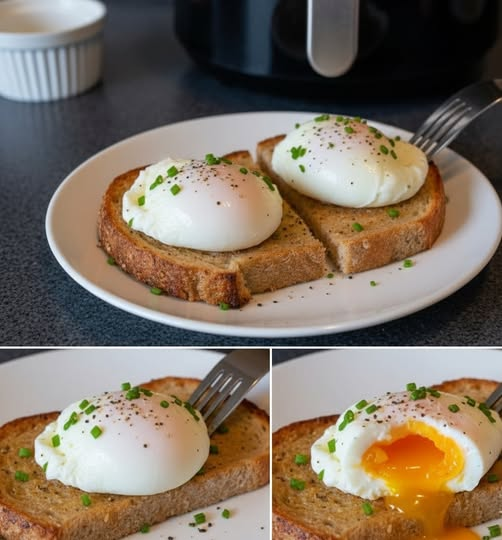
Poached eggs are often seen as one of those deceptively simple dishes that can be tricky to master. Traditionally, they require simmering water, a careful swirl, a splash of vinegar, and a steady hand to achieve that perfect tender white and silky, runny yolk. But using an air fryer changes the game entirely. It removes much of the guesswork and makes the process more approachable, especially for beginners or anyone who wants a reliable, repeatable method without hovering over a pot.
Below is a complete, detailed guide to making air fryer poached eggs, including tips, variations, troubleshooting, and serving ideas.
Introduction to Air Fryer Poached Eggs
Air fryers have become a staple in many kitchens due to their versatility and convenience. While they are commonly used for crisping foods, they can also be adapted for gentler cooking techniques like poaching. By using small heat-safe ramekins filled with water, you can mimic the moist cooking environment needed to gently cook eggs.
The result is surprisingly close to traditional poached eggs: tender whites, a delicate texture, and a rich yolk that flows beautifully when cut open.
Ingredients
To make air fryer poached eggs, you only need a few simple ingredients:
- Fresh eggs (as many as you want, depending on your air fryer size)
- Water (about 2–3 tablespoons per egg)
- A pinch of salt (optional)
- Black pepper (optional)
- Fresh herbs like chives or parsley (optional, for garnish)
- Butter or oil (for greasing ramekins)
Equipment Needed
- Air fryer
- Small oven-safe ramekins or silicone cups
- Spoon
- Tongs or oven mitts (for handling hot ramekins)
Step-by-Step Instructions
Step 1: Preheat the Air Fryer
Set your air fryer to 350°F (175°C) and allow it to preheat for about 3–5 minutes. Preheating ensures even cooking and helps the eggs start cooking immediately when placed inside.
Step 2: Prepare the Ramekins
Lightly grease each ramekin with a small amount of butter or oil. This step helps prevent the eggs from sticking and makes removal easier later.
Add 2–3 tablespoons of water into each ramekin. This water is essential because it creates the steam needed to gently cook the egg, mimicking traditional poaching.
Step 3: Crack the Eggs
Carefully crack one egg into each ramekin. Try to keep the yolk intact. If you’re concerned about shells, you can crack the egg into a small bowl first, then transfer it into the ramekin.
Step 4: Place in the Air Fryer
Arrange the ramekins in the air fryer basket. Make sure they are stable and not overcrowded, allowing proper air circulation.
Step 5: Cook the Eggs
Cook at 350°F (175°C) for about 5–7 minutes, depending on how you like your eggs:
- 5 minutes: Very runny yolk, soft whites
- 6 minutes: Slightly thicker whites, runny yolk
- 7 minutes: Firmer whites, slightly jammy yolk
Keep in mind that cooking times may vary slightly depending on your air fryer model and the size of your eggs.
Step 6: Remove Carefully
Using tongs or oven mitts, carefully remove the ramekins from the air fryer. They will be hot, so handle them with care.
Step 7: Serve
Gently lift the egg out with a spoon or tilt the ramekin to slide it out onto your plate. Serve immediately on toasted bread, avocado toast, or alongside your favorite breakfast items.
Texture and Flavor
Air fryer poached eggs have a delicate, silky texture. The whites are tender rather than rubbery, and the yolk remains rich and creamy. While they may not have the exact same shape as traditional poached eggs, the flavor and texture are remarkably similar.
Tips for Best Results
Use Fresh Eggs
Fresh eggs hold their shape better and produce a more cohesive white. Older eggs tend to spread out more in the water.
Adjust Water Amount
If your eggs are cooking too quickly or the whites seem firm, try adding a bit more water to increase steam.
Check Early
Since air fryers vary, check your eggs at the 5-minute mark to avoid overcooking.
Covering Option
Some people like to loosely cover the ramekins with foil to create more steam and prevent the tops from drying out.
Common Mistakes and How to Avoid Them
Overcooking
Leaving the eggs in too long will result in firm yolks. Always start checking early and adjust timing as needed.
Not Enough Water
Too little water can lead to uneven cooking. Make sure each ramekin has enough liquid to create steam.
Eggs Sticking
Skipping the greasing step can make removal difficult. Always lightly coat your ramekins.
Variations
Cheesy Poached Eggs
Add a small sprinkle of grated cheese into the ramekin before cooking for a richer flavor.
Herb-Infused Eggs
Mix chopped herbs like chives, parsley, or dill into the water before adding the egg.
Spicy Version
Add a pinch of chili flakes or a drop of hot sauce for a bit of heat.
Creamy Eggs
Replace some of the water with a splash of cream for a richer texture.
Serving Ideas
Air fryer poached eggs are incredibly versatile and can be served in many ways:
- On toasted sourdough bread with butter
- Over avocado toast with a sprinkle of chili flakes
- On top of sautéed spinach or greens
- As part of a breakfast bowl with grains and vegetables
- Paired with smoked salmon for a classic combination
- On top of a salad for added protein
Why This Method Works
The air fryer circulates hot air around the ramekins, gently heating the water and creating steam. This environment mimics the gentle simmer used in traditional poaching but without the need for precise water control or swirling techniques.
It is a controlled, contained method that reduces the risk of broken whites or overcooking.
Cleaning and Maintenance
After cooking, allow the ramekins to cool slightly before washing. Since they were greased, cleanup should be easy. Wash with warm soapy water or place them in the dishwasher if they are dishwasher-safe.
Final Thoughts
Making poached eggs in the air fryer is a simple and effective alternative to the traditional stovetop method. It removes much of the stress and unpredictability while still delivering excellent results. Whether you are preparing a quick breakfast or elevating a brunch dish, this method offers consistency and ease.