
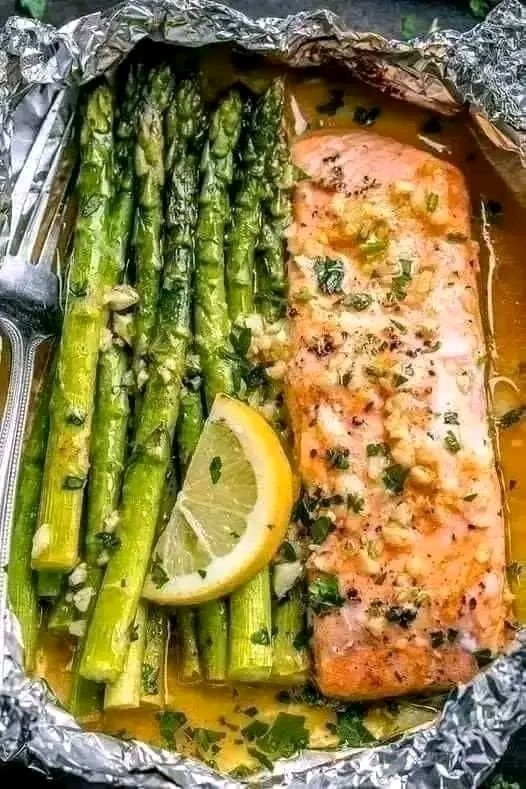
This baked salmon in foil is one of those timeless, dependable recipes that delivers elegance with minimal effort. It combines tender, flaky salmon with crisp-tender asparagus, all infused with a rich lemon garlic butter sauce that seeps into every bite. Cooking everything together in foil creates a sealed environment that locks in moisture and flavor, resulting in a dish that tastes far more complex than the simple steps required to make it.
This recipe is ideal for busy weeknights, but it is also impressive enough for entertaining guests. The preparation is straightforward, cleanup is minimal, and the ingredients are accessible. Over time, it becomes the kind of dish you return to again and again because it consistently works.
Ingredients
For the salmon and vegetables:
- 2 salmon fillets (about 6 ounces each, skin-on or skinless)
- 1 bunch asparagus, trimmed (about 1 pound)
- 1 tablespoon olive oil
- Salt, to taste
- Freshly ground black pepper, to taste
For the lemon garlic butter sauce:
- 3 tablespoons unsalted butter, melted
- 3 cloves garlic, minced
- 2 tablespoons fresh lemon juice
- 1 teaspoon lemon zest
- 1 tablespoon fresh parsley, finely chopped
- Optional: 1/2 teaspoon red pepper flakes for a mild kick
For garnish:
- Lemon slices
- Additional parsley
Preparation Time
- Prep time: 10–15 minutes
- Cook time: 15–20 minutes
- Total time: Approximately 30 minutes
Instructions
1. Preheat the Oven
Preheat your oven to 400°F (200°C). This temperature ensures that the salmon cooks evenly while allowing the asparagus to become tender without overcooking.
2. Prepare the Foil Packets
Tear off two large sheets of aluminum foil, each large enough to fold over and seal completely around the salmon and asparagus. If you prefer extra security, you can double-layer the foil to prevent any leakage.
Place the foil sheets on a flat surface or baking tray.
3. Season the Asparagus
Arrange the trimmed asparagus spears in the center of each foil sheet. Drizzle them lightly with olive oil and season with salt and black pepper. Toss gently to coat.
The asparagus forms a natural bed for the salmon, allowing the juices from the fish and sauce to drip down and flavor the vegetables during baking.
4. Add the Salmon
Place one salmon fillet on top of each bundle of asparagus. Pat the salmon dry with paper towels before seasoning to help the flavors adhere better.
Season the fillets with salt and freshly ground black pepper. If you prefer a more robust flavor, you can add a light sprinkle of paprika or garlic powder at this stage.
5. Make the Lemon Garlic Butter Sauce
In a small bowl, combine the melted butter, minced garlic, fresh lemon juice, and lemon zest. Stir until well blended. Add the chopped parsley and optional red pepper flakes.
This sauce is the heart of the dish. The butter provides richness, the garlic adds depth, and the lemon brightens everything, balancing the flavors.
6. Assemble the Packets
Spoon the lemon garlic butter sauce evenly over each salmon fillet and the surrounding asparagus. Make sure some of the sauce seeps down into the vegetables.
Top each fillet with a slice of lemon for extra aroma and visual appeal.
7. Seal the Foil
Fold the sides of the foil over the salmon and asparagus, then fold the ends to seal the packet tightly. The goal is to create a closed pouch that traps steam and prevents moisture from escaping.
Be careful not to wrap the foil too tightly around the food; leave a little space inside for air circulation and steam.
8. Bake
Place the foil packets on a baking sheet and transfer them to the preheated oven.
Bake for 15 to 20 minutes, depending on the thickness of the salmon. Thinner fillets may cook in as little as 12–15 minutes, while thicker cuts may require closer to 20 minutes.
The salmon is done when it flakes easily with a fork and has an opaque appearance throughout.
9. Serve
Carefully open the foil packets, being cautious of the hot steam. Transfer the salmon and asparagus to plates or serve directly in the foil for a rustic presentation.
Spoon any remaining sauce from the packet over the top and garnish with additional parsley if desired.
Tips for Best Results
Choose quality salmon:
Fresh, high-quality salmon makes a noticeable difference. Look for fillets that are firm, vibrant in color, and have a clean, mild scent.
Do not overcook:
Salmon continues to cook slightly after being removed from the oven. It is better to slightly undercook than overcook, as dry salmon loses its appeal quickly.
Adjust seasoning:
Taste your sauce before adding it to the salmon. You can adjust the lemon or garlic levels depending on your preference.
Customize vegetables:
While asparagus pairs perfectly with salmon, you can substitute or add vegetables such as green beans, zucchini, or thinly sliced carrots.
Variations
Herb variation:
Add fresh dill, thyme, or rosemary to the butter sauce for a different herbal profile.
Spicy version:
Increase the red pepper flakes or add a dash of cayenne pepper for heat.
Creamy twist:
After baking, drizzle a small amount of cream or a dollop of sour cream into the sauce for a richer finish.
Citrus blend:
Combine lemon juice with a bit of orange juice for a slightly sweeter, more complex citrus flavor.
Serving Suggestions
This dish is well-balanced on its own, but it pairs beautifully with:
- Steamed rice or quinoa
- Mashed potatoes
- A simple green salad
- Crusty bread to soak up the sauce
Storage and Reheating
Storage:
Store leftovers in an airtight container in the refrigerator for up to 2 days.
Reheating:
Reheat gently in the oven at 300°F (150°C) or in a covered skillet over low heat. Avoid microwaving if possible, as it can dry out the salmon.
Why This Recipe Works
Cooking salmon in foil is a method that combines steaming and baking. The sealed environment traps moisture, allowing the fish to cook gently while absorbing all the flavors of the sauce. The asparagus benefits from the same process, becoming tender while retaining its structure and freshness.
The balance of fat from the butter, acidity from the lemon, and aromatics from the garlic creates a harmonious flavor profile that enhances the natural richness of the salmon without overpowering it.