
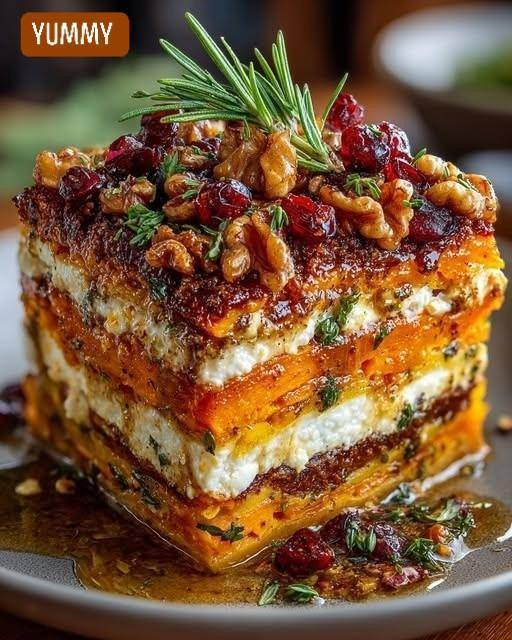
Ingredients
Vegetable Layers
- 2 medium sweet potatoes, peeled and thinly sliced
- 2 cups butternut squash, peeled and thinly sliced
- 2 large carrots, peeled and thinly sliced
Cheese Layer
- 1 ½ cups crumbled feta cheese
- 1 cup ricotta cheese
- ½ cup grated Parmesan cheese
- 1 egg
- 1 teaspoon dried thyme
- 1 teaspoon dried oregano
- Salt and black pepper to taste
Nut Layer
- 1 cup chopped walnuts, lightly toasted
Cranberry-Honey Glaze
- 1 cup dried cranberries
- ½ cup honey
- ¼ cup orange juice
- 1 tablespoon balsamic vinegar
- 1 teaspoon fresh rosemary, finely chopped
- ½ teaspoon cinnamon
- Pinch of salt
Additional
- 3 tablespoons olive oil
- Fresh herbs (parsley or thyme) for garnish
Understanding the Structure of the Dish
Unlike traditional lasagna that relies on pasta sheets, this version uses thin slices of vegetables as structural layers. This requires careful slicing and moisture control to ensure the final dish holds together while still being tender.
Each layer serves a purpose:
- Sweet potatoes provide body and mild sweetness
- Butternut squash adds creaminess and a slightly nutty flavor
- Carrots bring brightness and subtle texture
- Cheese mixture adds richness and binds layers
- Walnuts introduce crunch and depth
- Cranberry glaze delivers contrast and complexity
Step 1: Preparing the Vegetables
Uniform slicing is essential. Use a mandoline slicer if possible to achieve thin, even slices (about ⅛ inch thick). If using a knife, take your time to keep slices consistent.
Once sliced, place the vegetables in separate bowls. Lightly toss each with a bit of olive oil, salt, and pepper.
To improve texture and reduce excess moisture:
- Lay slices on a baking sheet
- Roast at 375°F (190°C) for 10–15 minutes
This step partially cooks them and prevents the lasagna from becoming watery.
Step 2: Preparing the Cheese Mixture
In a large bowl, combine:
- Crumbled feta
- Ricotta cheese
- Parmesan
- Egg
- Thyme and oregano
Mix until smooth and well incorporated. The egg helps the mixture set during baking, giving the lasagna structure.
Taste and adjust seasoning. Keep in mind feta is already salty, so go lightly on additional salt.
Step 3: Toasting the Walnuts
Place chopped walnuts in a dry skillet over medium heat. Toast for 3–5 minutes, stirring frequently until fragrant.
This step enhances their flavor and adds a deeper, slightly buttery note.
Set aside to cool.
Step 4: Making the Cranberry-Honey Glaze
In a small saucepan, combine:
- Dried cranberries
- Honey
- Orange juice
- Balsamic vinegar
- Rosemary
- Cinnamon
- Pinch of salt
Bring to a gentle simmer over medium heat. Cook for about 8–10 minutes until the cranberries soften and the mixture thickens slightly.
The glaze should be syrupy but still pourable. If it becomes too thick, add a splash of water or juice.
Set aside to cool slightly.
Step 5: Assembling the Lasagna
Preheat your oven to 375°F (190°C). Lightly grease a baking dish.
Layering Order:
- Spread a thin layer of cranberry glaze on the bottom
- Add a layer of sweet potatoes
- Spread a portion of the cheese mixture
- Sprinkle walnuts
- Add butternut squash layer
- Repeat cheese and walnuts
- Add carrot layer
- Continue repeating layers until ingredients are used
Finish with a top layer of vegetables, a final spread of cheese, and a generous drizzle of cranberry glaze.
Press down gently as you build layers to compact everything slightly.
Step 6: Baking
Cover the dish with foil and bake for 40 minutes.
Then remove the foil and bake an additional 20–25 minutes until:
- The top is golden
- The edges are bubbling
- A knife easily slides through the layers
For extra caramelization, you can broil the top for 3–5 minutes at the end.
Step 7: Resting and Serving
Allow the lasagna to rest for at least 15–20 minutes before slicing.
This step is crucial. It allows the layers to set, making it easier to cut clean portions.
Garnish with fresh herbs and an extra drizzle of glaze before serving.
Flavor Profile and Texture
This dish delivers a complex balance:
- Sweetness from root vegetables and honey
- Tanginess from feta and cranberries
- Crunch from walnuts
- Herbaceous notes from rosemary and thyme
The texture is layered and satisfying, with soft vegetables contrasted by creamy cheese and occasional crunch.
Variations and Customizations
Make It Vegan
- Replace feta and ricotta with plant-based alternatives
- Use a flax egg instead of a regular egg
Add Protein
- Include cooked lentils or chickpeas between layers
Change the Nuts
- Pecans or hazelnuts work well as substitutes for walnuts
Spice It Up
- Add chili flakes to the glaze for a sweet-heat contrast
Common Mistakes to Avoid
- Skipping pre-roasting vegetables: Leads to excess moisture
- Cutting slices too thick: Results in uneven cooking
- Overloading with glaze early: Can make layers slippery
- Not resting before cutting: Causes the lasagna to fall apart
Storage and Reheating
Store leftovers in an airtight container in the refrigerator for up to 4 days.
Reheat in the oven at 350°F until warmed through. Cover with foil to prevent drying.
This dish also freezes well. Freeze in portions and thaw overnight before reheating.
Final Thoughts
This layered vegetable lasagna transforms simple ingredients into an elegant, deeply satisfying meal. It’s a perfect example of how thoughtful layering, contrasting textures, and balanced flavors can elevate humble vegetables into something memorable.

- Air Fryer Cheesy Stuffed Potatoes - April 13, 2026
- Air Fryer Victoria Sponge Cake - April 13, 2026
- Chinese Chicken Cabbage Stir-Fry - April 13, 2026