
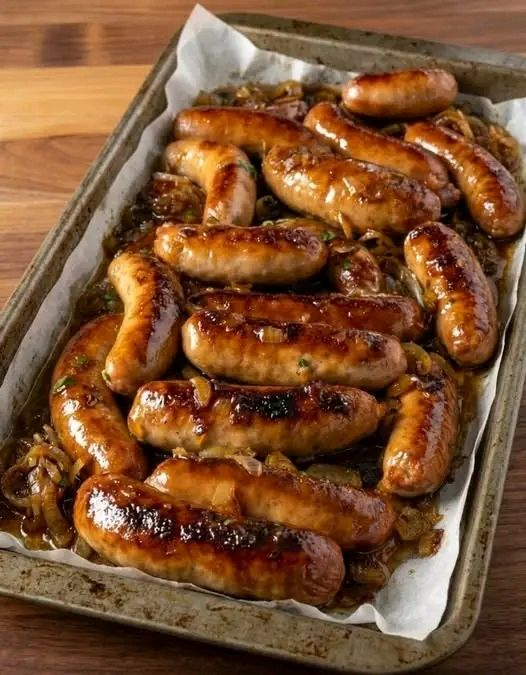
Ingredients
- 10–12 pork sausages (or your preferred variety)
- 3 large onions, thinly sliced
- 3 tablespoons olive oil
- 2 tablespoons butter
- 2 teaspoons brown sugar
- 2 teaspoons balsamic vinegar
- 1 teaspoon salt (adjust to taste)
- ½ teaspoon black pepper
- 1 teaspoon dried thyme (or a few fresh sprigs)
- 1 teaspoon Dijon mustard (optional, for depth)
- ½ cup beef or chicken stock
- 2 cloves garlic, minced
Understanding the Method
This recipe works because of two key processes happening simultaneously:
- Fat rendering and browning from the sausages
- Slow caramelization of onions beneath them
As the sausages cook, their juices drip down into the onions. Meanwhile, the onions release moisture, preventing burning and creating a soft, almost confit-like base. The result is a self-basting system where everything enhances everything else.
Step 1: Prepare the Onions
Start by slicing your onions thinly and evenly. Uniform slices ensure they cook at the same rate and reach that soft, caramelized consistency together.
Heat a large skillet over medium heat and add olive oil and butter. Once melted, add the onions and a pinch of salt. Cook them gently for 10–15 minutes, stirring occasionally.
At this stage, you’re not trying to fully caramelize them—just soften them and start the process. They should become translucent and slightly golden.
Add the brown sugar and balsamic vinegar. This combination accelerates caramelization while adding a subtle tang that balances the sweetness.
Stir in the garlic and cook for another minute.
Step 2: Build the Base
Transfer the partially cooked onions into a lined baking tray. Spread them evenly across the bottom to create a thick, even layer.
Pour in the stock. This keeps everything moist during baking and helps create a rich, flavorful sauce.
Add thyme and black pepper. If using Dijon mustard, whisk it into the stock before pouring for even distribution.
Step 3: Prepare the Sausages
Before placing the sausages on the onions, lightly brown them in a skillet over medium-high heat for about 5–6 minutes.
This step is crucial for two reasons:
- It develops a flavorful crust through the Maillard reaction
- It prevents the sausages from looking pale after baking
You don’t need to cook them through—just get a nice golden color on the outside.
Step 4: Assemble
Arrange the browned sausages on top of the onion layer. Nestle them in slightly so they make contact with the onions but still sit mostly on top.
Make sure they’re spaced evenly so heat can circulate properly.
Step 5: Slow Bake
Preheat your oven to 375°F (190°C).
Place the tray in the oven and bake for 30–40 minutes.
Halfway through cooking, gently turn the sausages and stir the onions underneath. This ensures even browning and prevents sticking.
As it cooks, you’ll notice:
- The sausages deepen in color and develop a glossy finish
- The onions darken and collapse into a soft, jam-like texture
- The liquid reduces into a rich, slightly sticky sauce
If you want extra caramelization, switch to broil for the final 3–5 minutes, watching carefully to avoid burning.
Step 6: Rest and Finish
Remove the tray from the oven and let it rest for 5 minutes.
This allows the juices to settle and the sauce to thicken slightly.
Taste the onions and adjust seasoning if needed. A small splash of vinegar or pinch of salt at the end can brighten everything.
Serving Suggestions
This dish is incredibly versatile. You can serve it:
- Over mashed potatoes for a classic comfort meal
- With crusty bread to soak up the sauce
- Alongside roasted vegetables
- As a filling for sandwiches or rolls
The rich onion base acts almost like a built-in gravy, so you don’t need much else.
Why This Method Feels Transformative
Most people cook sausages quickly—pan-fried or grilled. That works, but it doesn’t unlock their full potential.
This method changes that by:
- Allowing fat to slowly render, keeping sausages juicy
- Letting onions absorb all the flavor
- Creating a cohesive dish instead of separate components
It turns a simple ingredient into something layered and complex.
Variations
1. Add Apples
Sliced apples can be mixed into the onions for a sweet-savory contrast.
2. Use Different Sausages
Try:
- Italian sausages for a herb-forward flavor
- Chicken sausages for a lighter option
- Spicy varieties for heat
3. Add Beer or Wine
Replace part of the stock with beer or red wine for deeper flavor.
4. Herb Variations
Rosemary, sage, or bay leaves all work beautifully.
Common Mistakes to Avoid
- Skipping the browning step: You’ll miss out on depth of flavor.
- Too much liquid: This prevents caramelization.
- Overcrowding the pan: Leads to steaming instead of roasting.
- High heat throughout: Burns onions before they soften.
Storage and Reheating
Store leftovers in an airtight container in the refrigerator for up to 3 days.
Reheat in the oven at 350°F until warmed through, or in a skillet over medium heat. Add a splash of stock if needed to loosen the sauce.
This dish often tastes even better the next day as the flavors continue to meld.
Final Thoughts
Cooking sausages this way elevates them from a quick, everyday protein to a centerpiece dish. The combination of caramelized onions, rendered sausage juices, and slow oven heat creates something far greater than the sum of its parts.